Customs and duties

Know your landed cost before you ship

How duty rates, customs valuation and import VAT combine into the price your buyer actually pays at the border.

A small parcel on a wooden packing table beside a printed commercial invoice, a customs declaration form and a roll of tape, with a laptop showing a spreadsheet of line-item costs

What cross-border sellers need to get right

Three parts of an international order decide whether it arrives profitably: the paperwork cleared at the border, the carrier that moves it, and the version of the listing the buyer actually reads.

01

Customs paperwork that clears the first time

A commercial invoice with a specific goods description, correct HS code and declared value matched to the transaction is what a customs officer uses to classify and duty the shipment. Vague entries like "gift" or "sample" invite holds, storage fees and reclassification. The payoff is fewer delays and a duty bill you can predict before the parcel leaves.

Customs Documentation and Duties
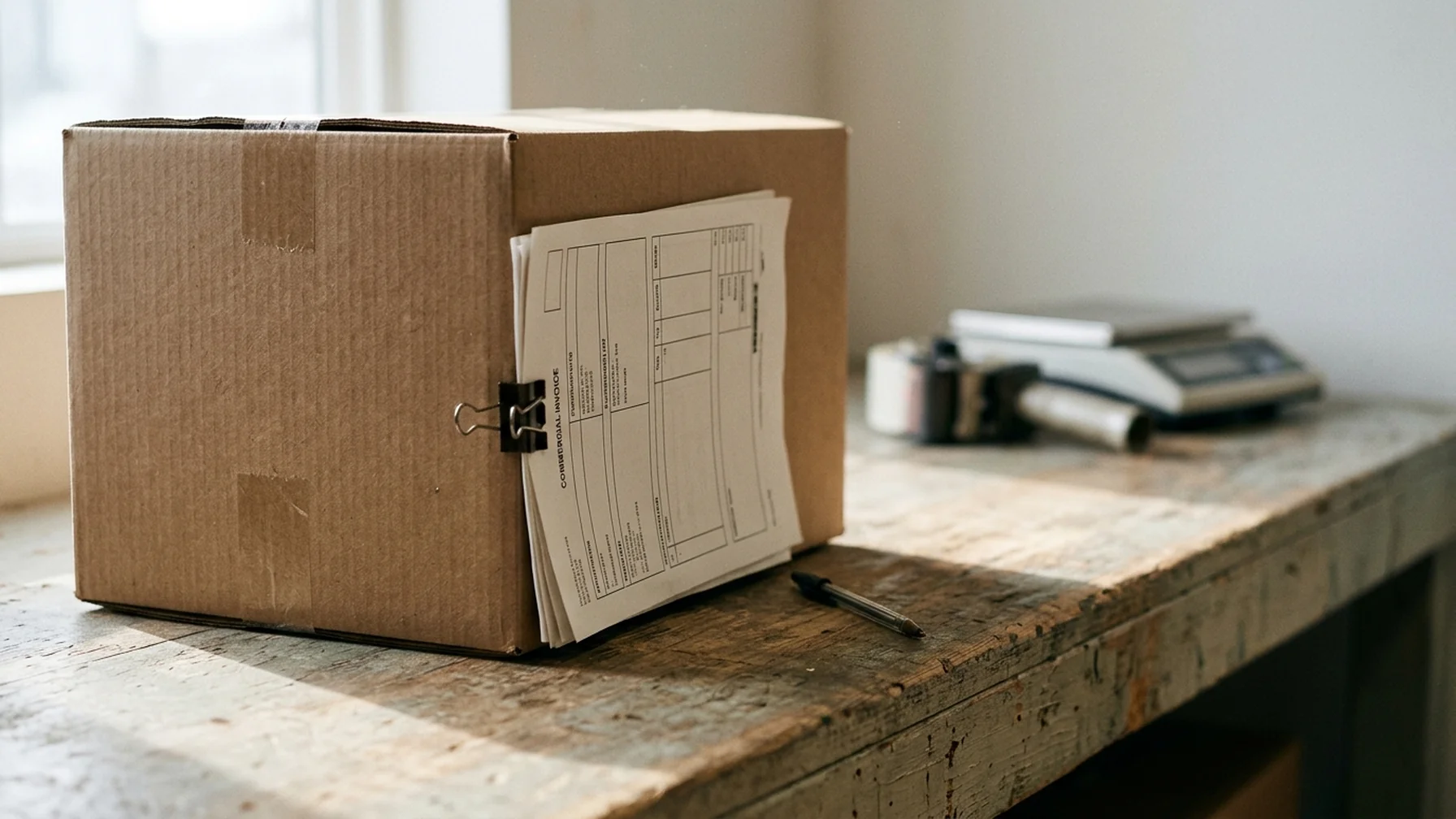
Close-up of a commercial invoice and packing list clipped to a cardboard export carton on a warehouse bench, HS code column visible, natural window light.

02

A carrier chosen for the destination, not the discount

Express couriers, postal networks and freight forwarders differ in transit time, tracking depth, customs brokerage included and who handles a failed delivery. The cheapest per-kilo rate can cost more once a returned parcel and a second outbound shipment are counted. Match the service to the order value and the buyer's expectation, and keep a backup option for each region.

International Shipping Carriers and Logistics
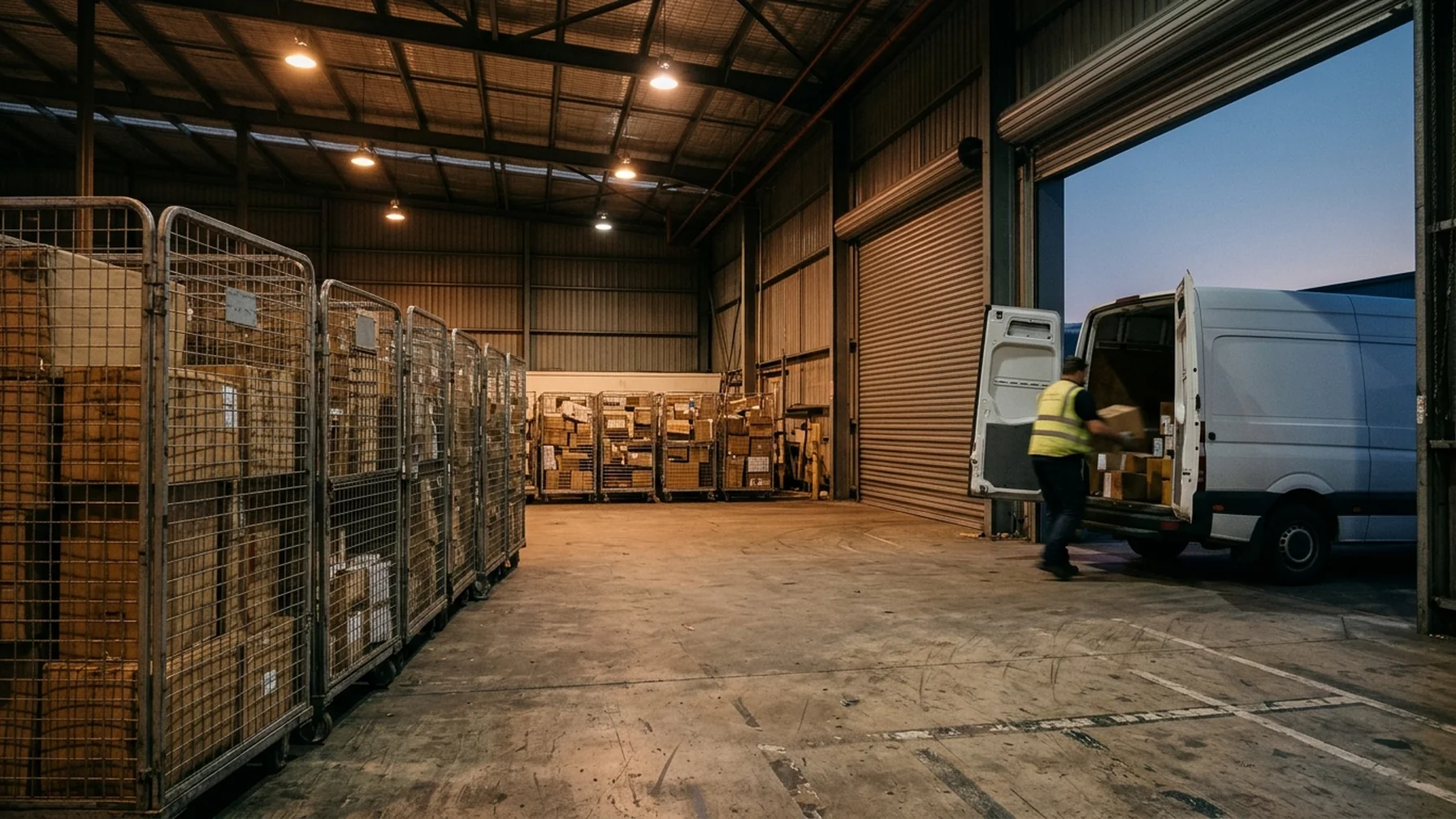
Sorting hub at dusk with stacked parcel cages and a delivery van being loaded, workers in high-visibility vests moving cartons.

03

A localized listing that reads like a local one

Translation alone leaves currency, sizes, date formats and payment methods foreign to the buyer. Localization means the price shows in their currency with tax stated the way their market expects, product claims fit local rules, and the returns policy names a real address. That is what turns a browse into a checkout without a support message first.

Localization: Language, Currency and Product Adaptation
Laptop on a kitchen table showing a product page with a price in euros, a size chart and a delivery date, a notebook and coffee cup beside it.
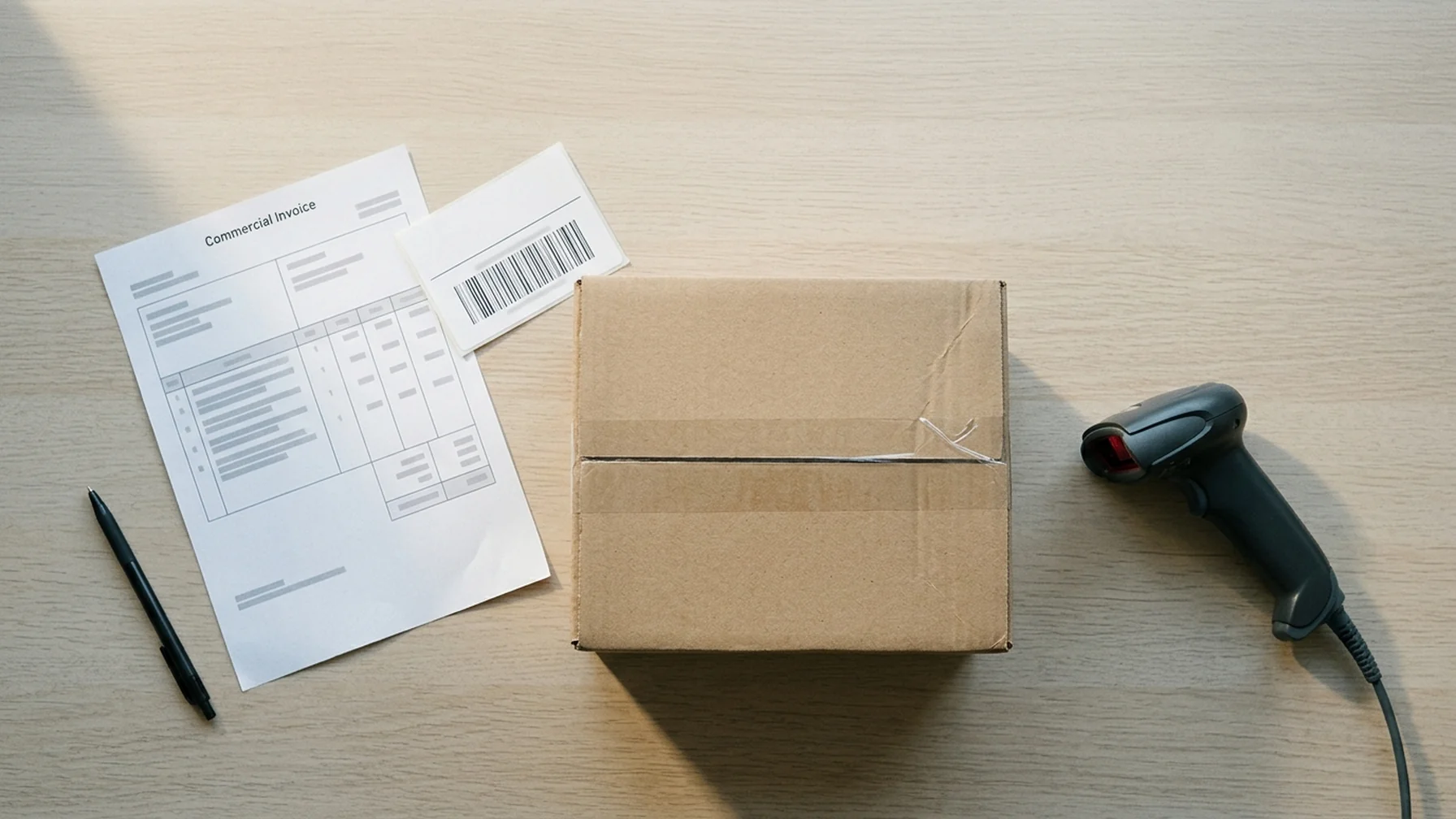
A shipping desk with a printed commercial invoice beside a boxed parcel, a barcode label and a handheld scanner, lit by daylight from a nearby window

Customs documentation and duties

Customs paperwork that clears the first time

A commercial invoice, a correct HS code and declared values that match the shipment are what customs officers check before anything else moves.

  • Classify each product with one HS code and keep it consistent across invoices and labels
  • Declare the price actually paid, not a rounded-down figure, and state the currency
  • Match the invoice description to what is inside the box, in plain product terms
  • Attach the invoice to the outside of the parcel so it is reachable without opening
Read the customs documentation articles

Customs Documentation Without the Guesswork

The paperwork that clears a shipment is the same paperwork that decides what you pay, so getting it right the first time saves both delay and duty.

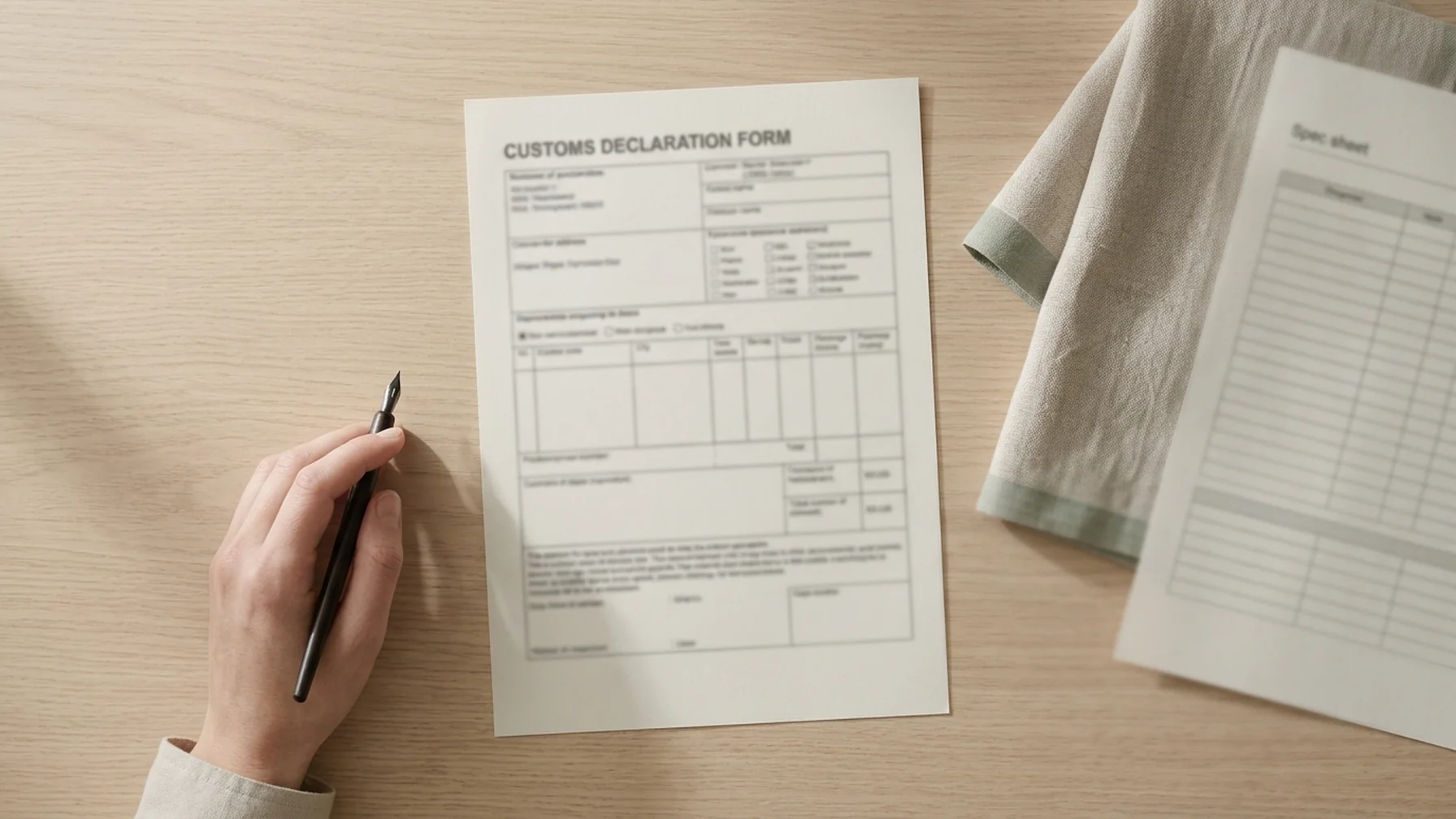
A customs declaration form on a desk beside a fabric sample and a printed product specification sheet, a hand holding a pen over the code field

Classify before you ship

A tariff code sets the duty rate, and the same product can land in different codes depending on material or function. Build a written classification per SKU with the reasoning behind it, so a customs broker or auditor can follow the logic rather than guess at it.

Read the customs documentation articles
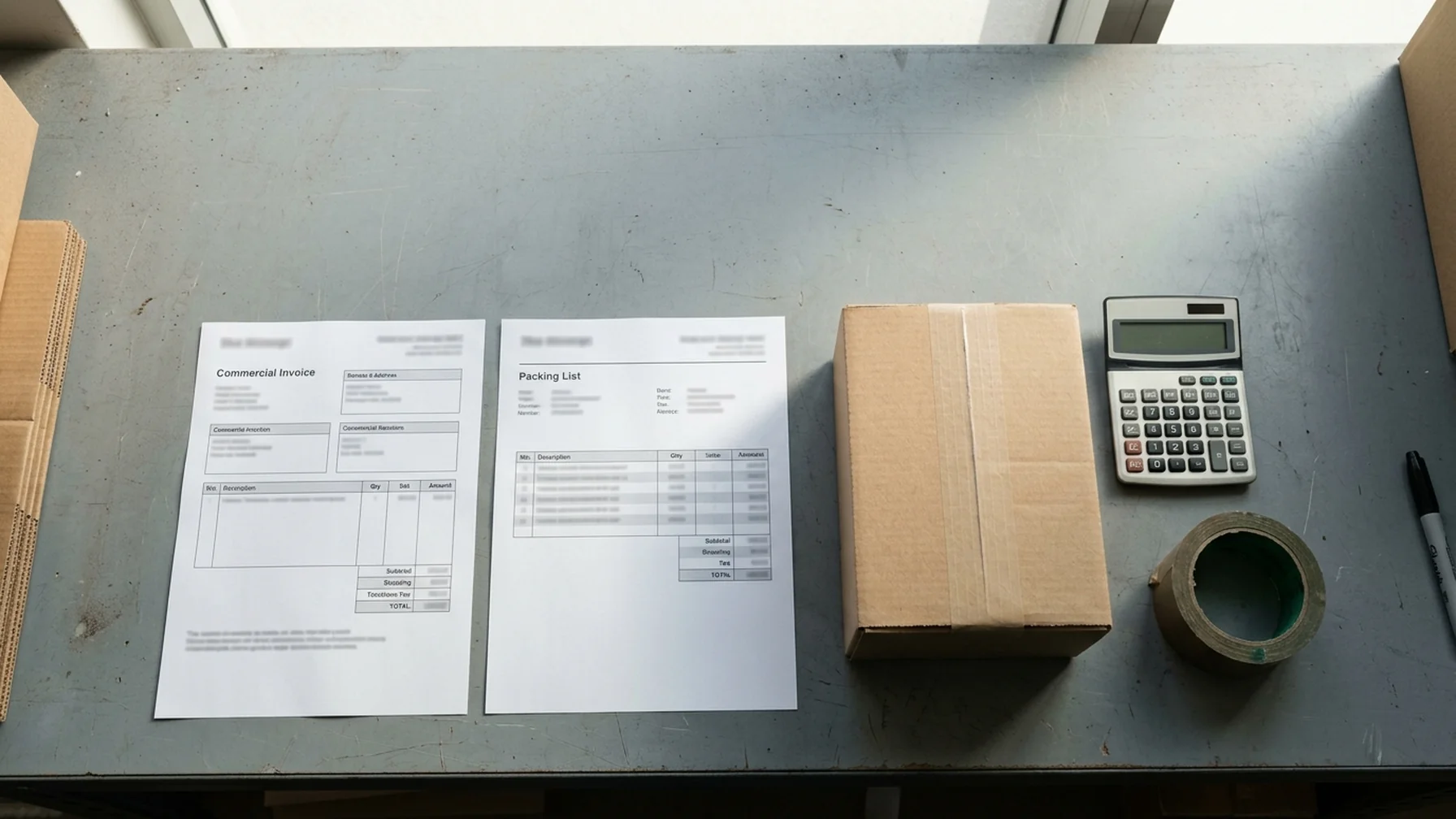
A commercial invoice and packing list side by side on a packing bench with a small sealed carton and a calculator

Value is more than the price tag

Declared value drives duty and VAT, and it has to include the elements the destination country counts, such as freight or royalties in some jurisdictions. Keep the commercial invoice consistent with the packing list and the order record; mismatches are what trigger holds and post-clearance audits.

Browse valuation and duty articles
A labeled archive box of shipment folders on a shelf, one folder open showing a stack of customs documents

Keep records that survive an audit

Customs authorities can review entries years after the goods arrive. Store the invoice, classification note, proof of origin and shipping documents together per shipment, and note who changed what and when. Origin evidence matters most: a preference claim without supporting records can be reversed and billed later.

See recordkeeping guidance

Customs Documentation and Duties

A missing commercial invoice stops the shipment

Duties and clearance hinge on paperwork that matches the goods, the declared value and the tariff code, so errors surface at the border rather than at checkout.

Read customs documentation articles

Email updates

Get the next cross-border update

Occasional notes when we add or revise guidance on customs paperwork, carrier selection, VAT handling or localization.

We use your address only to send these updates. Unsubscribe from any email. See our contact page for questions about your data.